Acoustic Fish Deterrents

Water intakes at power stations, hydropower schemes and industrial sites can cause significant fish injury and mortality through impingement, entrainment or turbine passage, particularly during downstream migration.

Fishtek Marine’s Acoustic Fish Deterrents (AFDs) use underwater sound to encourage fish to avoid intakes and, where available, move towards safer routes such as bypasses. AFDs can operate independently or alongside physical measures, including screens and fish return systems, as part of a wider fish protection strategy. Suitable for all water abstractions including nuclear, thermal & hydropower.

Designed Around Fish Hearing

Fish species differ widely in the frequencies they can detect and in how sensitive they are to different frequencies. A deterrent is only effective if its signal falls within the hearing range of the target species and reaches the fish at a level above both their hearing threshold and at a level sufficient to cause an avoidance response.

For this reason, each AFD is designed for its site rather than supplied as a standard unit. Our fisheries scientists and engineers specify each system from the published hearing thresholds of the species of concern, the acoustic conditions at the site and the layout of the intake. The aim is a signal matched both to the fish and to the location.
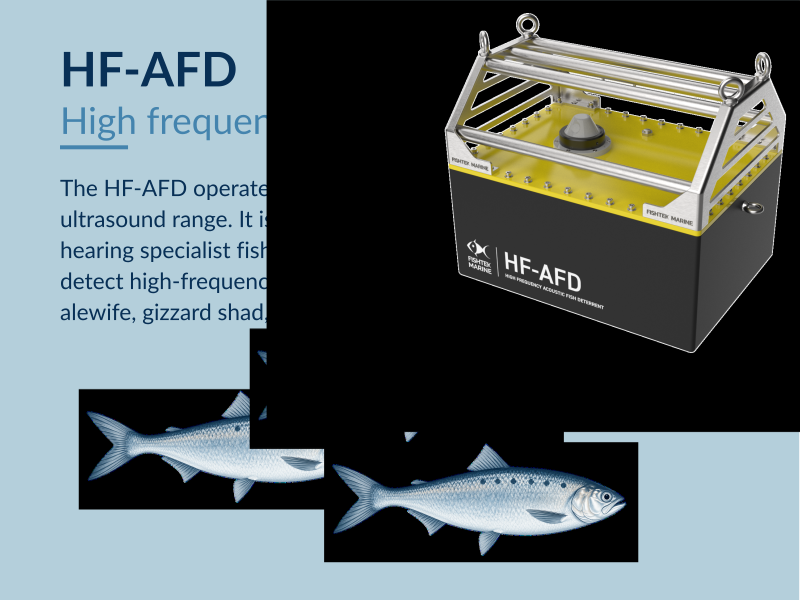
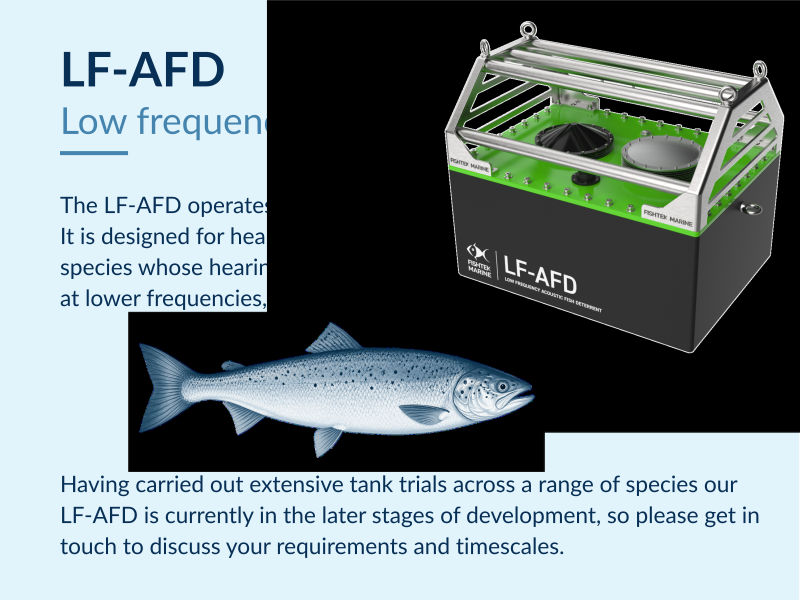
Our systems

Power and deployment

Systems can be deployed in freshwater, estuarine and marine environments, and can be battery or mains powered depending on the site’s requirements and infrastructure. Battery power removes the need for shore cabling, giving maximum flexibility over where and when a system is deployed, including at remote sites or for seasonal operation during migration periods. Mains power allows higher source levels to be sustained, which suits larger intakes and acoustically noisy sites where the signal needs to carry further.

Field evidence

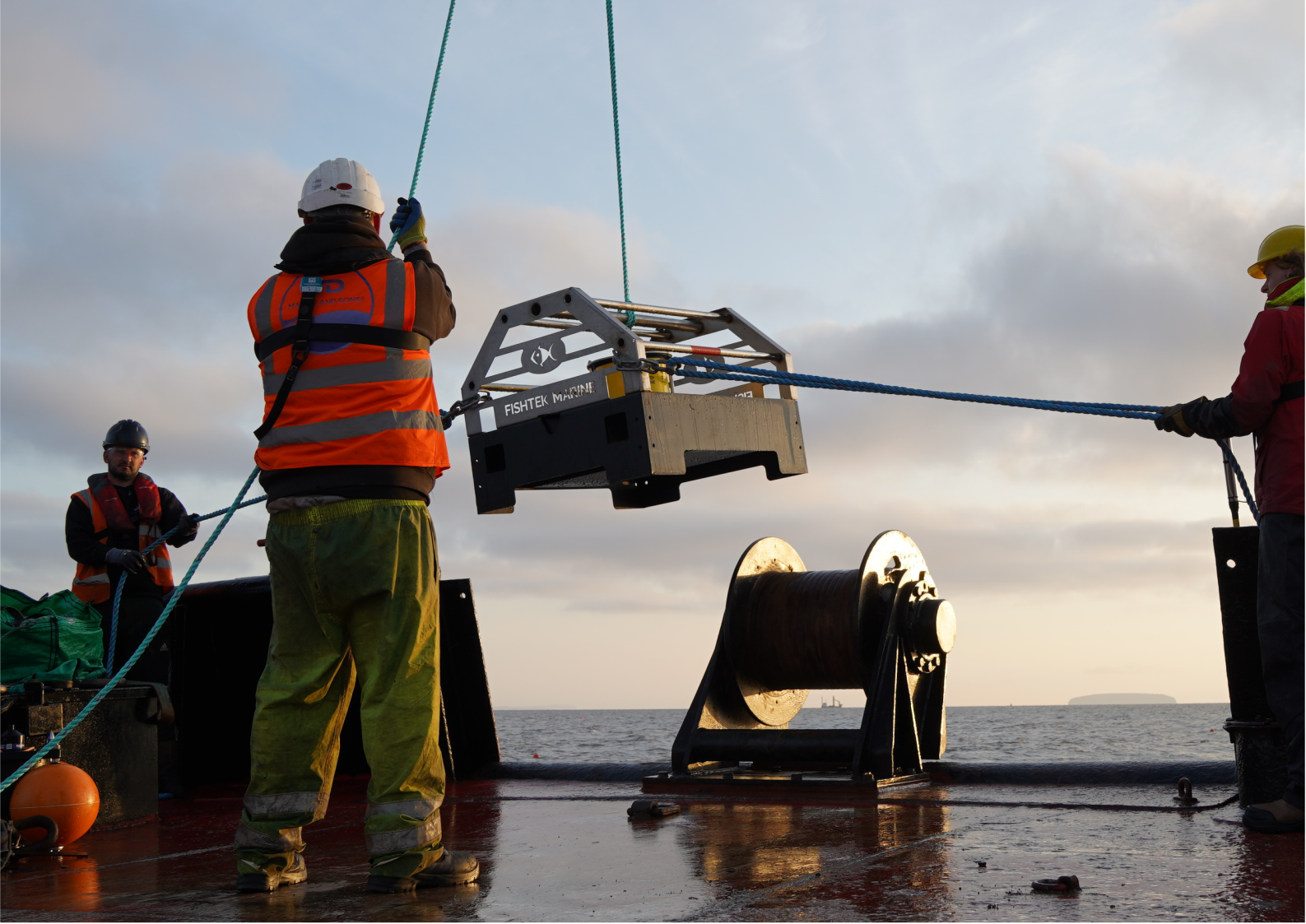
In June 2025 we carried out a full-scale field trial of the HF-AFD at Hinkley Point C on the Severn Estuary, where an AFD is a condition of the station’s Development Consent Order.

Swansea University tracked tagged twaite shad using acoustic telemetry. The trial used a before-after control-impact (BACI) design, comparing fish behaviour at treatment and control intake heads before and during operation. While the system was active, shad stayed significantly further from the treatment heads, with no change at the control heads. More than 90% of tagged shad did not approach within 60 m of the intake heads where the HF-AFD was deployed.

Full deployment at Hinkley Point C is planned for 2028.

Discuss Your Site With Us

Every project starts with understanding your site and the species you need to protect. Share details of your target species, intake layout, consenting timeline and any existing survey or impingement data.

Our team can then assess the most appropriate AFD solution and outline the next steps for your project.

To discuss your requirements, contact: harry.thatcher@fishtekmarine.com

We use third-party cookies to personalise content and analyse site traffic.

View our Privacy Policy