Home Development Marine Infrastructure Projects

Marine Infrastructure Projects

Alongside bycatch mitigation devices, we also offer technology that is designed to solve undesirable interactions between marine life and infrastructure. Our experienced engineers collaborate with academics, experienced fishermen and marine policy professionals, bringing together a unique knowledge base that enables us to find solutions for marine infrastructure projects that benefit both industry and ocean.

Collaboration is core to our products’ success, consulting with clients to ensure that each technological development integrates seamlessly into operations for maximum productivity.

Hinkley Point C

Acoustic Fish Deterrents

The cooling water intakes for the Hinkley Point C nuclear power station will draw in 132,000 litres of water per second from the Severn Estuary. The intake units are 3 km out into the estuary. Low velocity intake heads and a fish return system have been incorporated to reduce the impact on fish, however, there is still a risk to fish species such as sprat, herring, shad, bass, and salmon. Different options had been considered by EDF to  mitigate  the scale of impact, but these all came with significant technical  challenges and were deemed unfeasible.
THE BRIEF

In January 2025, Fishtek Marine was approached by EDF Energy to explore whether a self-powered Acoustic Fish Deterrent (AFD) could be developed to protect sensitive fish species around the Hinkley Point C cooling-water intakes.

DEVELOPING THE IDEA

Drawing on our in-house engineering expertise and  track record with self-powered acoustic pinger  technology, Fishtek Marine was commissioned to design and build a large-scale AFD array for fish trials at the intake heads.

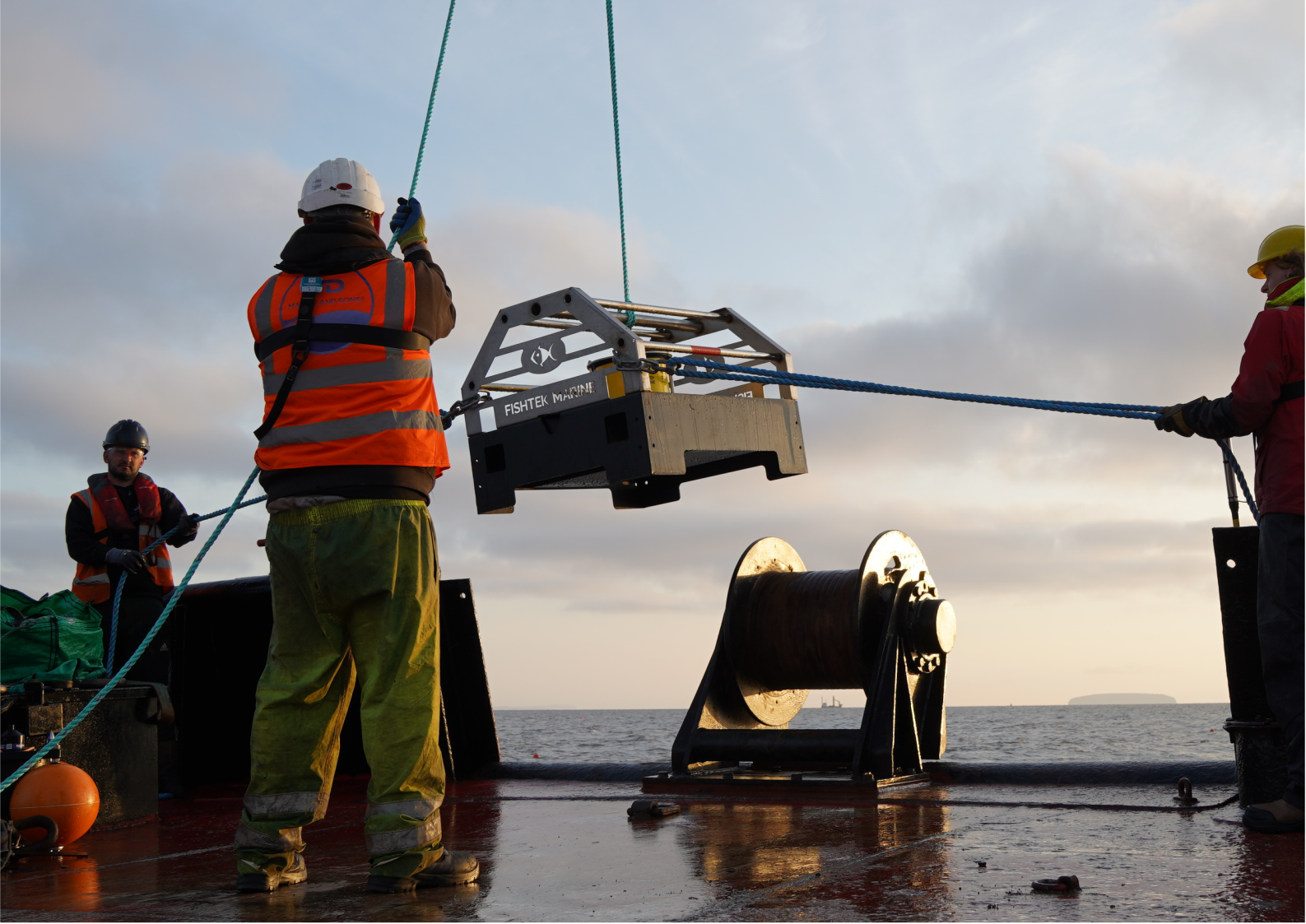
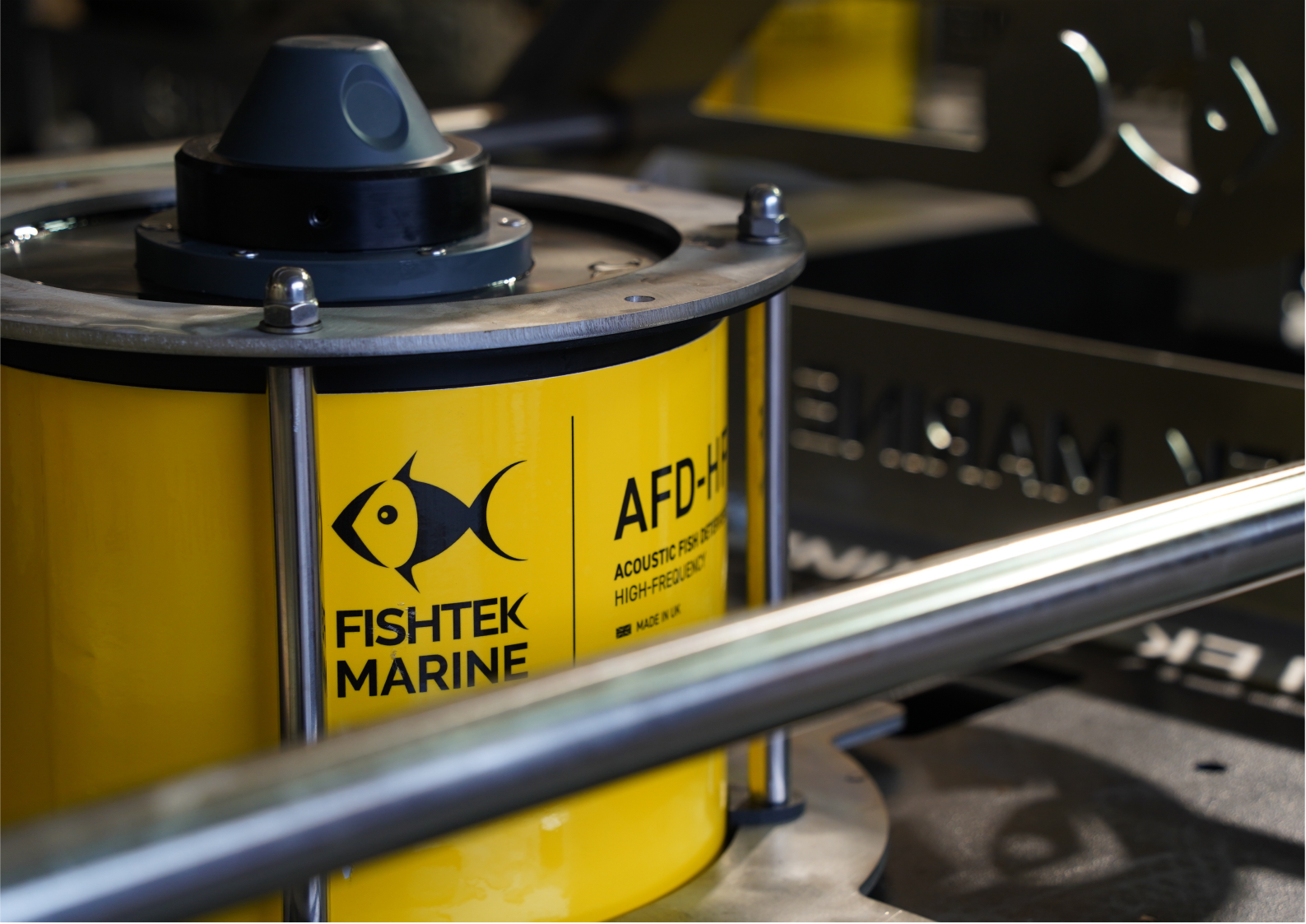
The AFD array is self-powered, deployable from a vessel, capable of producing ultrasonic high frequency pings and functions reliably in the harsh environment of the Severn Estuary.

RESULTS

The AFD system was deployed around 2 of the 4 intake heads and monitored by Dr David Clarke’s team at Swansea University through the summer 2025, using acoustically tagged Shad.

Results exceeded our expectations, with >90% of Shad excluded from the intake heads with AFD’s deployed compared to control heads with no AFD’s.

We are now developing the full high frequency AFD system for Shad and Herring for deployment around all 4 intake heads.

Tank trial results of the low frequency AFD for other fish species (cod, bass, salmon, whiting) are very encouraging and we are developing and testing the low frequency system through 2026.